

Construction of a new retaining wall
Project information
Construction project
Renovation of a retaining wall on County Road 32Customer
Engineering office - Dr. Jochims & BurtscheidtConstruction
Martin Wurzel Baugesellschaft mbHLocation
Nideggen-Rath , DEConstruction time
April 2023 – December 2023Products used
Project details


Situation
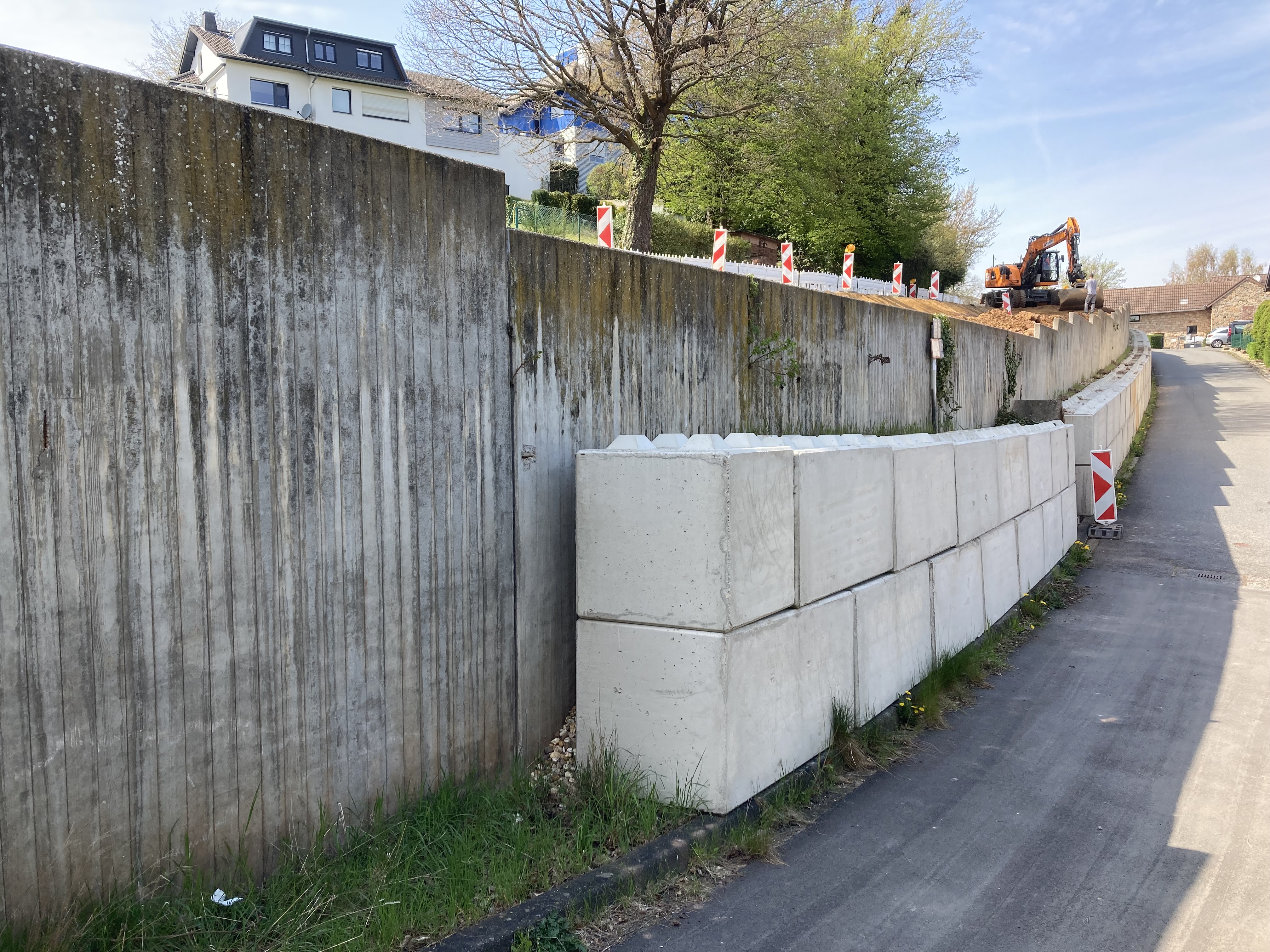
Below Rather Straße (K32) in the Rath district of Nideggen, there was originally a retaining wall dating from the 1970s. During a routine structural inspection, the district of Düren (North Rhine-Westphalia) determined that the wall’s stability could no longer be guaranteed due to significant damage. This led to a partial road closure and temporary safety measures using concrete blocks. Refurbishment of the existing structure was not an option, so a complete rebuild became necessary. The aim of the project was to create a permanently stable solution that blends into the existing surroundings whilst offering economic and ecological advantages over conventional solid construction methods.
Solution
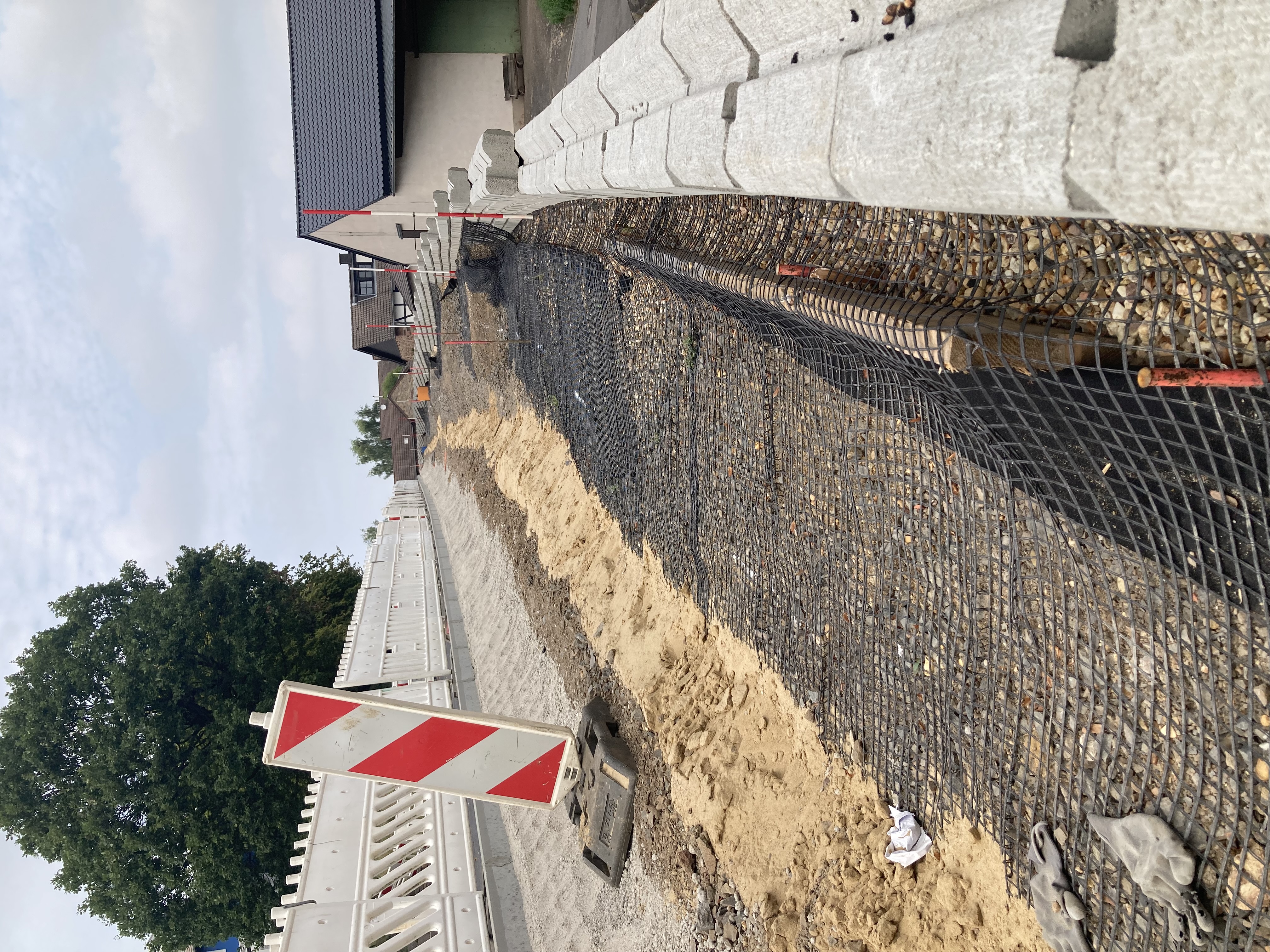
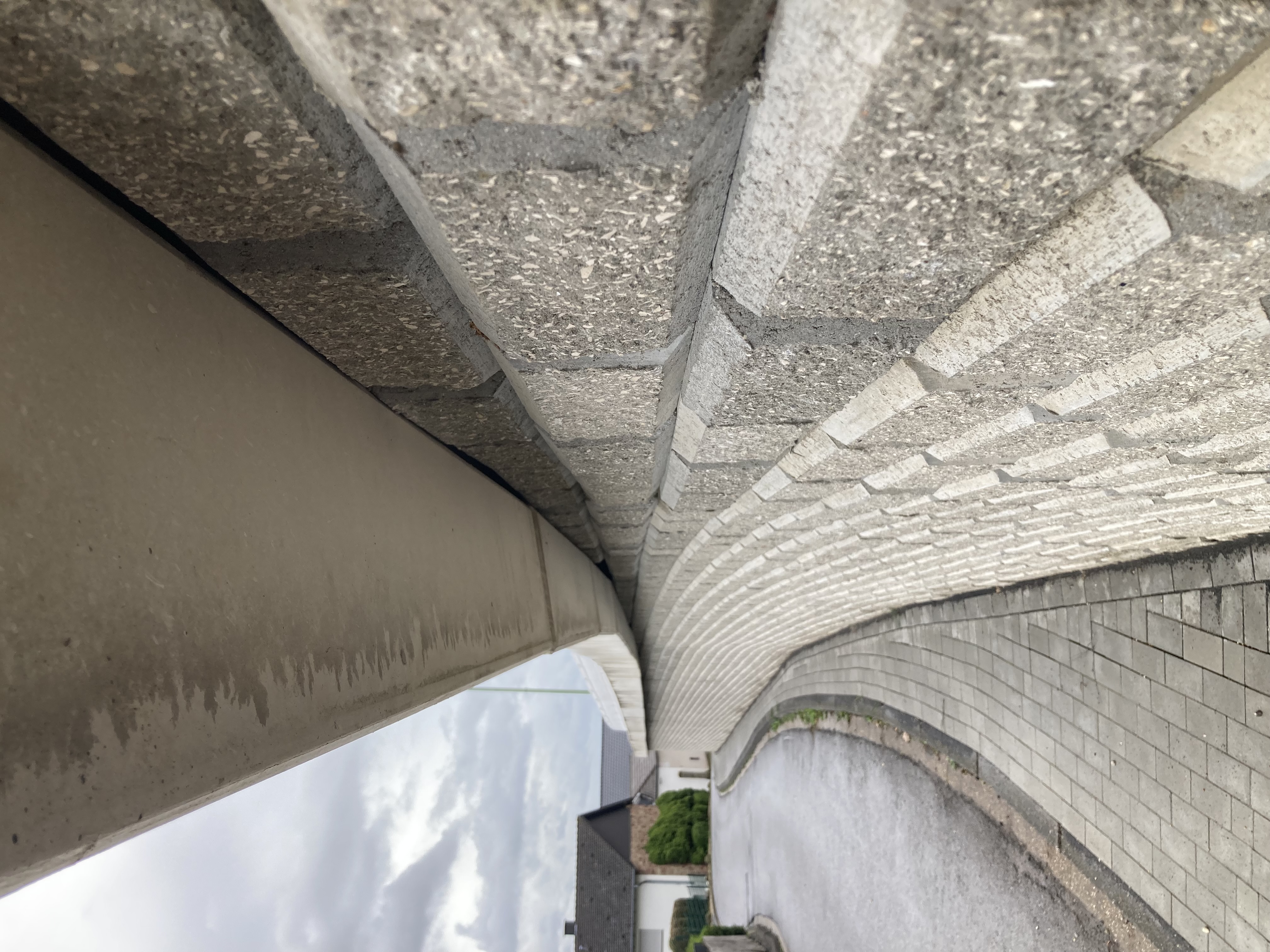
The District of Düren, in collaboration with the engineering firm Dr. Jochims & Burtscheidt, planned a retaining wall using the GRS (Geosynthetic Reinforced Soil) construction method, with a passive facing made of crushed concrete blocks. This is structurally connected to the reinforced soil but does not perform a load-bearing function. Following a successful tender process, Martin Wurzel Baugesellschaft mbH commissioned HUESKER Synthetic GmbH to carry out the detailed design and supply the relevant system components, consisting of Fortrac geogrids and INORA concrete blocks. The project was implemented using the Fortrac Block System, in which the geosynthetic-reinforced earth structure transfers the load and the block stone façade serves as a durable, robust facing.
Advantages
Thanks to close coordination between all project stakeholders, the new structure was successfully and safely completed. The new retaining wall ensures the long-term stability of the K32 road running above it and completely replaces the temporary safety measures. Compared to a solid concrete wall, the construction offers significant advantages: lower material consumption, reduced transport volumes and a more flexible construction method. At the same time, the block-stone appearance blends harmoniously into the local landscape. The solution thus combines technical safety, cost-effectiveness and environmental considerations in a durable structural design.