


Pavement repair S16
Project information
Construction project
S 16 Arlberg ExpresswayCustomer
ASFINAGConstruction
Company TEERAG ASDAG GmbH, KematenLocation
Klösterle , ATPlaning
AMIKO Bau Consult, Engineering Practice of DI Andreas BrandnerConstruction time
June 2013 to August 2013Products used
Project details


The Arlberg Expressway S 16 in Austria connects the Inntal Motorway A 12 in Tyrol with the Rheintal Motorway A 14 in Vorarlberg. This heavily used, high-traffic road is a vital link in the road network of western Austria. In the summer of 2013, the S 16 in Vorarlberg underwent extensive refurbishment in the area of the Langen Tunnel and the adjacent Wilden and Alfenz bridge structures to the west. The existing asphalt surface was completely renewed over a stretch of approximately 4 km. As the existing carriageway in the area of the Wilden viaduct showed severe cracking in the asphalt, the client and designers decided to install asphalt reinforcement as part of the resurfacing works in order to sustainably delay the occurrence of reflective cracking.
Solution
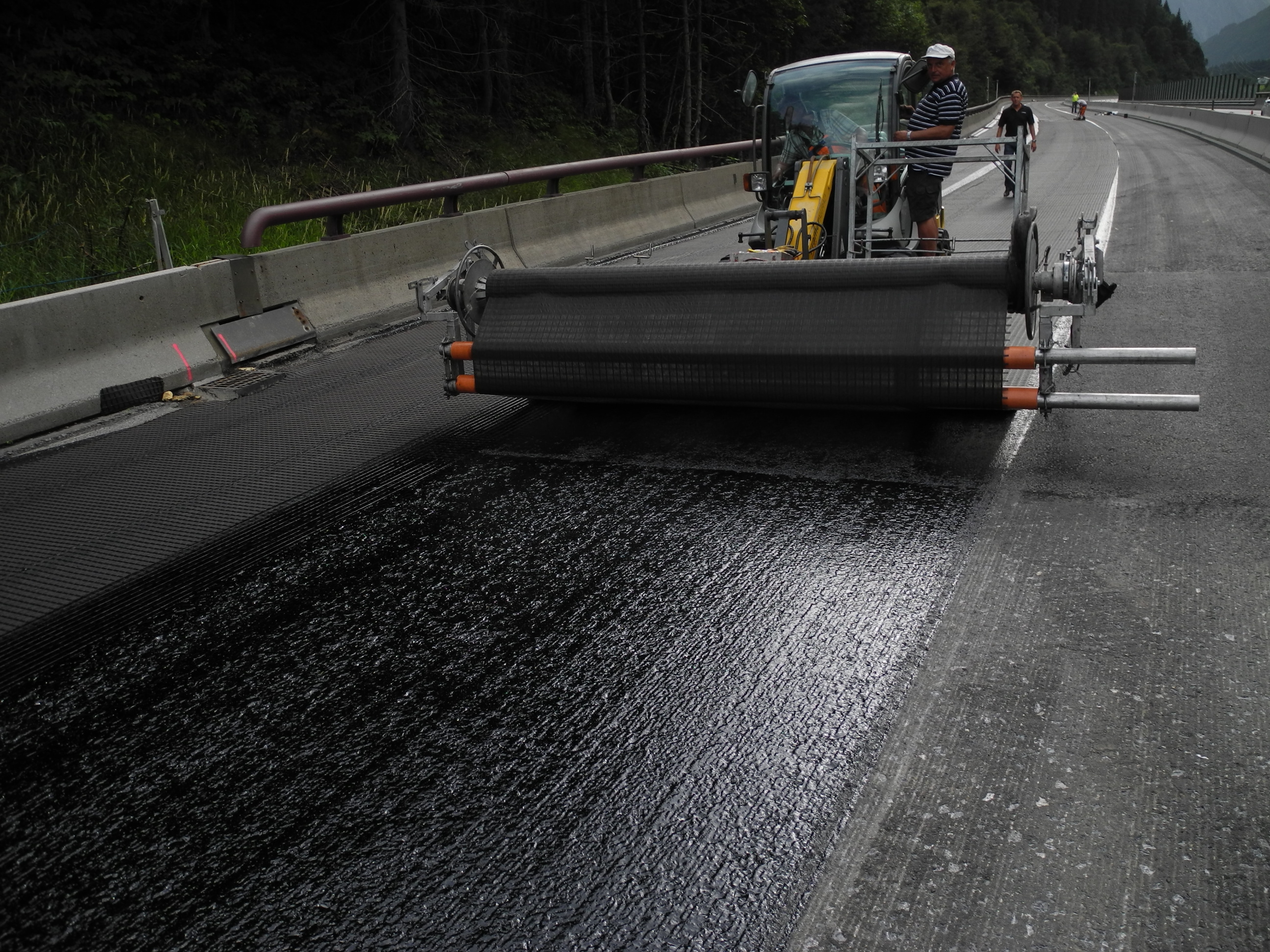
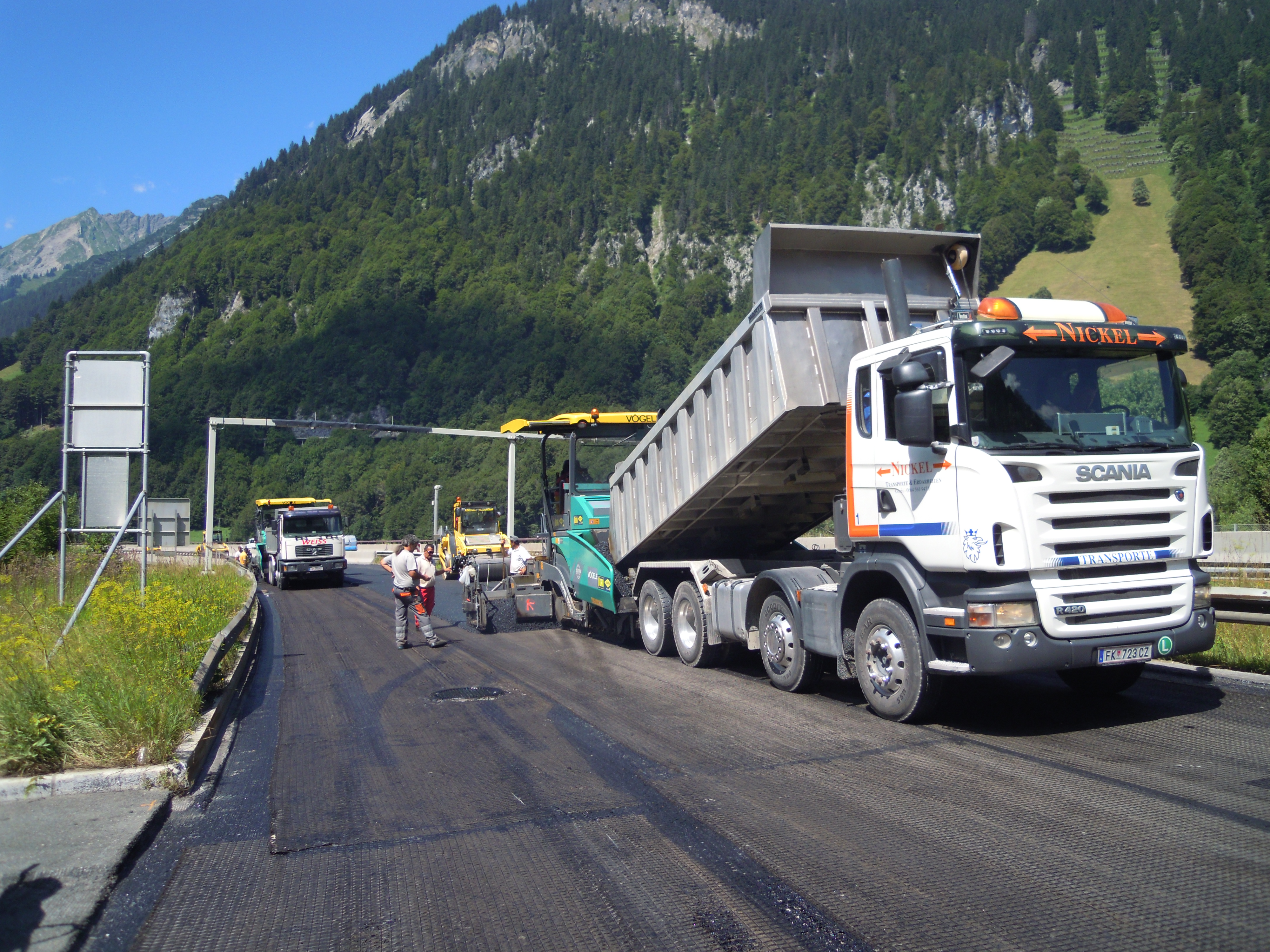
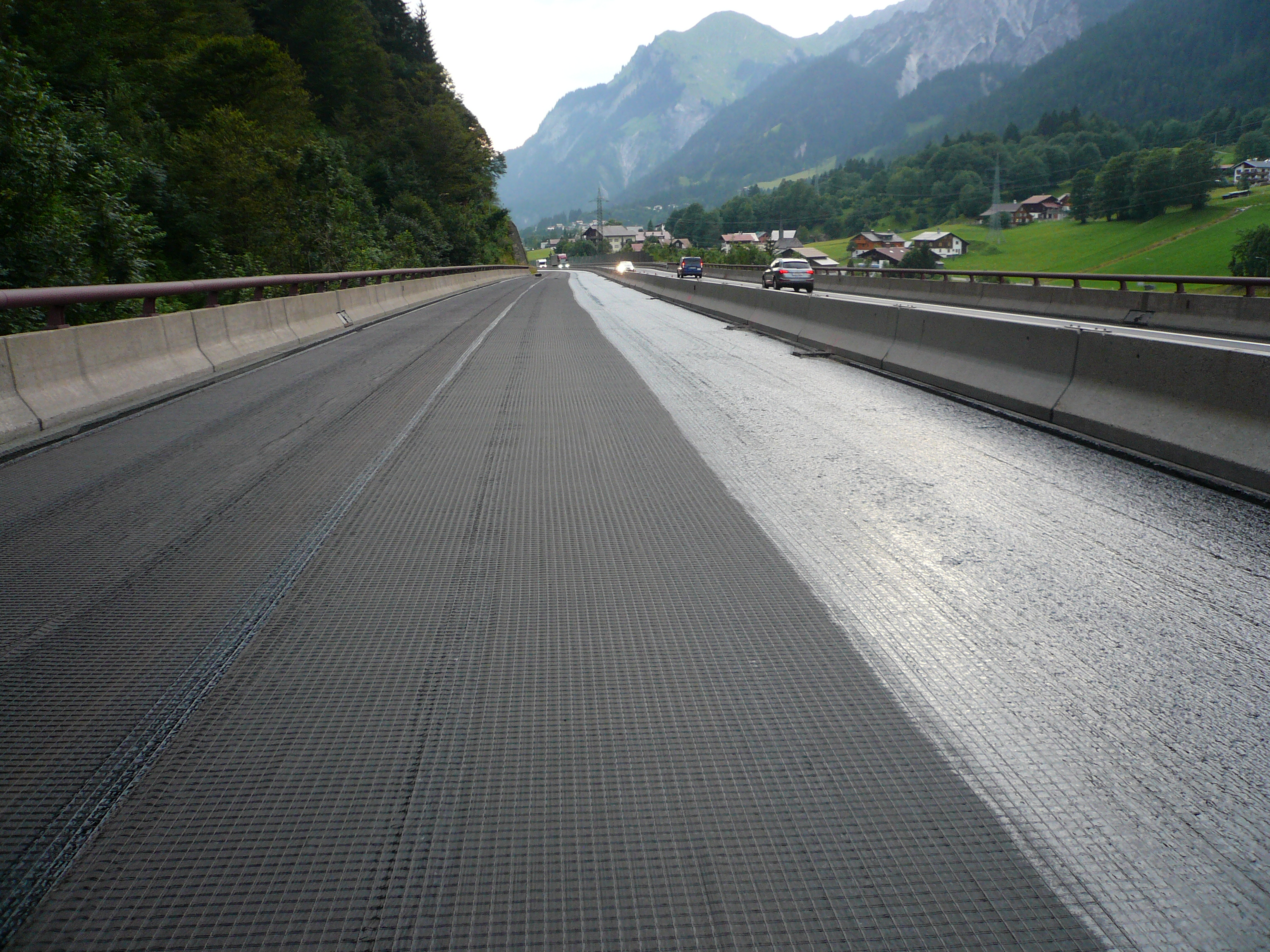
Based on numerous practical case studies and scientific evidence, it was decided to install an asphalt reinforcement grid over the entire surface of the road in the area of the Wilden slope bridge on the Bludenz to St. Anton route, covering a stretch of approximately 1.45 km and an average carriageway width of around 8.60 m. First, 9 cm was milled off the existing asphalt structure. A polymer-modified bitumen emulsion (70% bitumen content) was sprayed onto the surface, which had been cleaned using high-pressure water and left to dry. The laying of an asphalt reinforcement grid into the partially broken-down bitumen emulsion was carried out mechanically using a laying device mounted on a small tractor. The laying process went smoothly, enabling the work to be completed in a single day. The asphalt reinforcement mesh was then covered with a 5 cm asphalt binder course (AC 22) and a 4 cm surface course (SMA 11) five days later due to adverse weather conditions.
Advantages
Numerous scientific studies and decades of practical experience show that the service life of road surfaces is increased by the use of asphalt reinforcement grids, and that maintenance intervals are significantly extended. For road maintenance authorities, this means that the total cost of the road is significantly reduced in terms of its service life and operating costs.
Further information