


Erosionssicherung Überströmstrecke
Project information
Construction project
Flood relief for the Picheldorfer BachCustomer
Ministry of Life ATConstruction
Wildbach- und Lawinenverbauung Mittleres </br>Murtal und MürztalLocation
Oberaich , ATPlaning
Engineering agency - PerzplanConstruction time
July 2012Products used
Project details


Aufgabe
To protect the municipality of Oberaich, near Bruck an der Mur (Styria, Austria), against the devastating effects of localised heavy rainfall events, various protective structures were constructed in the catchment area of the Picheldorfer Bach. The plans included the construction of a rainwater retention basin, the flood discharge from which was to be channelled via a breach in the dam into the adjacent St. Dionysen power station canal. In the event of an overflow, the affected section of the existing dam is exposed to considerable hydraulic stresses, which can lead to severe erosion and ultimately a dam breach.
Solution
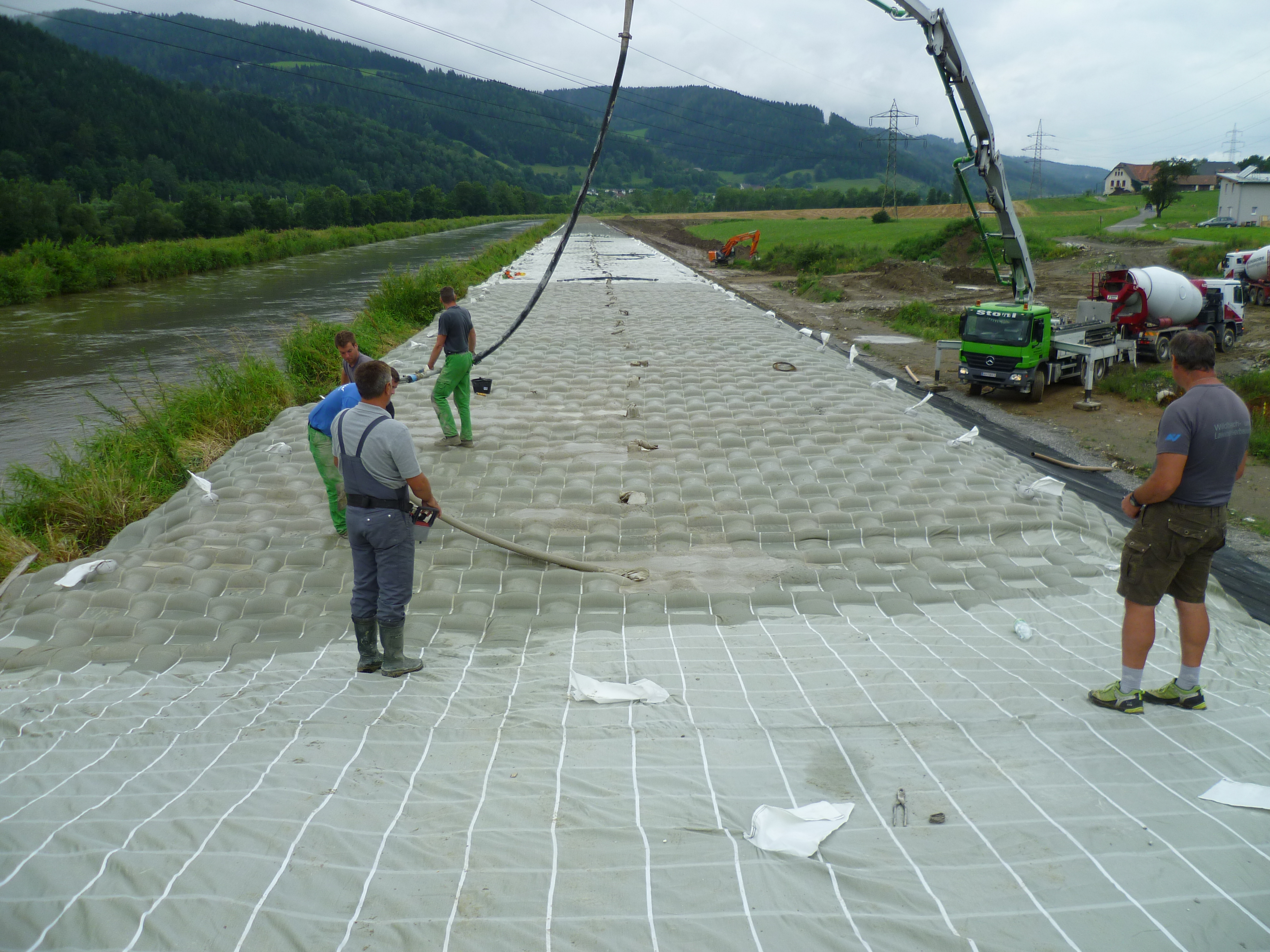
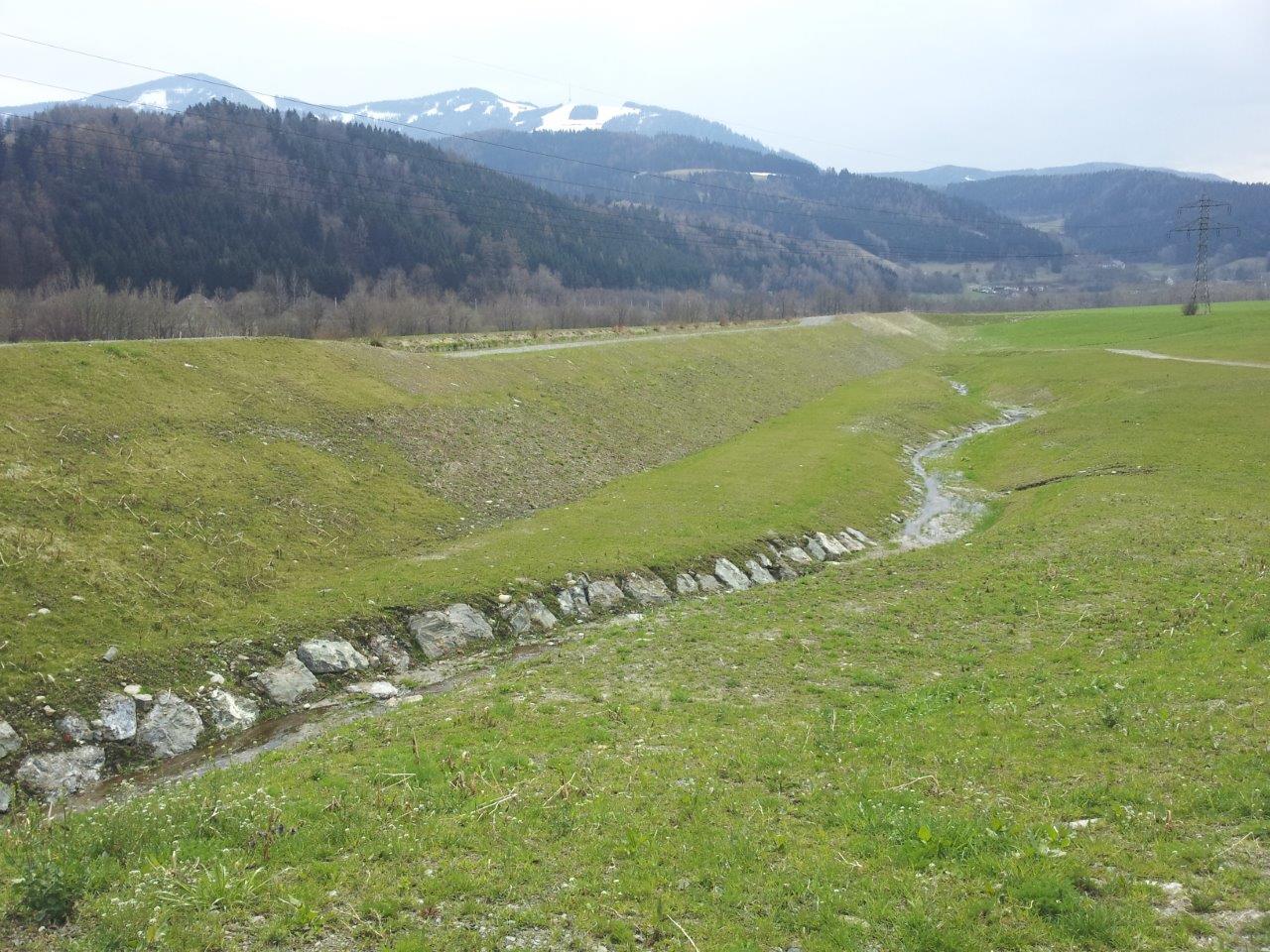
To prevent damage caused by overflowing water that could compromise the stability of the structure, the revetment in the area of the spillway had to be designed to be erosion-resistant. To form the spillway, the existing crest was first deepened in sections and adapted to the required geometry. A geosynthetic concrete mat was then installed over it. In Oberaich, three factory-prefabricated panels, each measuring approximately 550 m², were laid out on the compacted subgrade, connected to one another using zip fasteners and subsequently filled with flowable concrete. Once set, the structure was topped with a humus-rich cover and vegetated. In the event of overflow, erosion of this vegetation layer is permissible, as the function of erosion protection is taken over by the underlying concrete mat. Plant growth, which began shortly after completion, benefits from the water permeability of the underlying erosion protection. Furthermore, the vegetation ensures optimal integration into the landscape.
Advantages
No major excavation work or other significant alterations to the existing structure were required to create a robust concrete lining on the embankment body. The entire cross-section – that is, the crest and the slopes on both sides – could be concreted continuously without joints. Thanks to the use of the geosynthetic concrete mat, no formwork was required even on the sloping surfaces, as this function was performed by the fabric. The installation and filling of the approximately 1,650 m² of concrete mat was completed without any problems within two working days.
Further information