


Underwater installation of sewer seal
Project information
Construction project
Refurbishment Mittlerer Isar-KanalCustomer
E.ON Wasserkraft GmbHConstruction
HAGN Umwelttechnik GmbHLocation
Moosburg an der Isar , DEPlaning
Bau + Plan Ingenieurgesellschaft mbHConstruction time
June to November 2013Products used
Project details


Situation
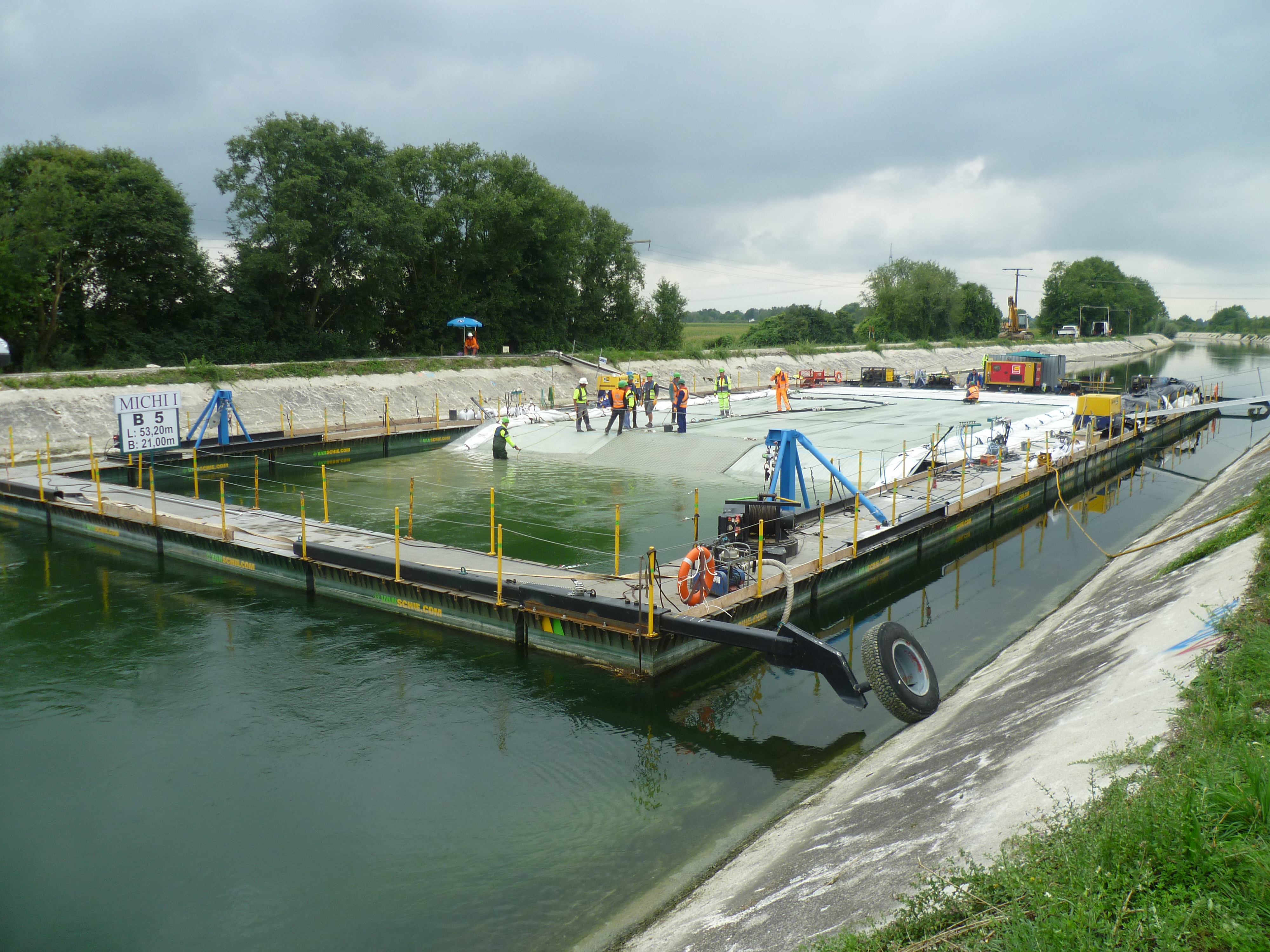
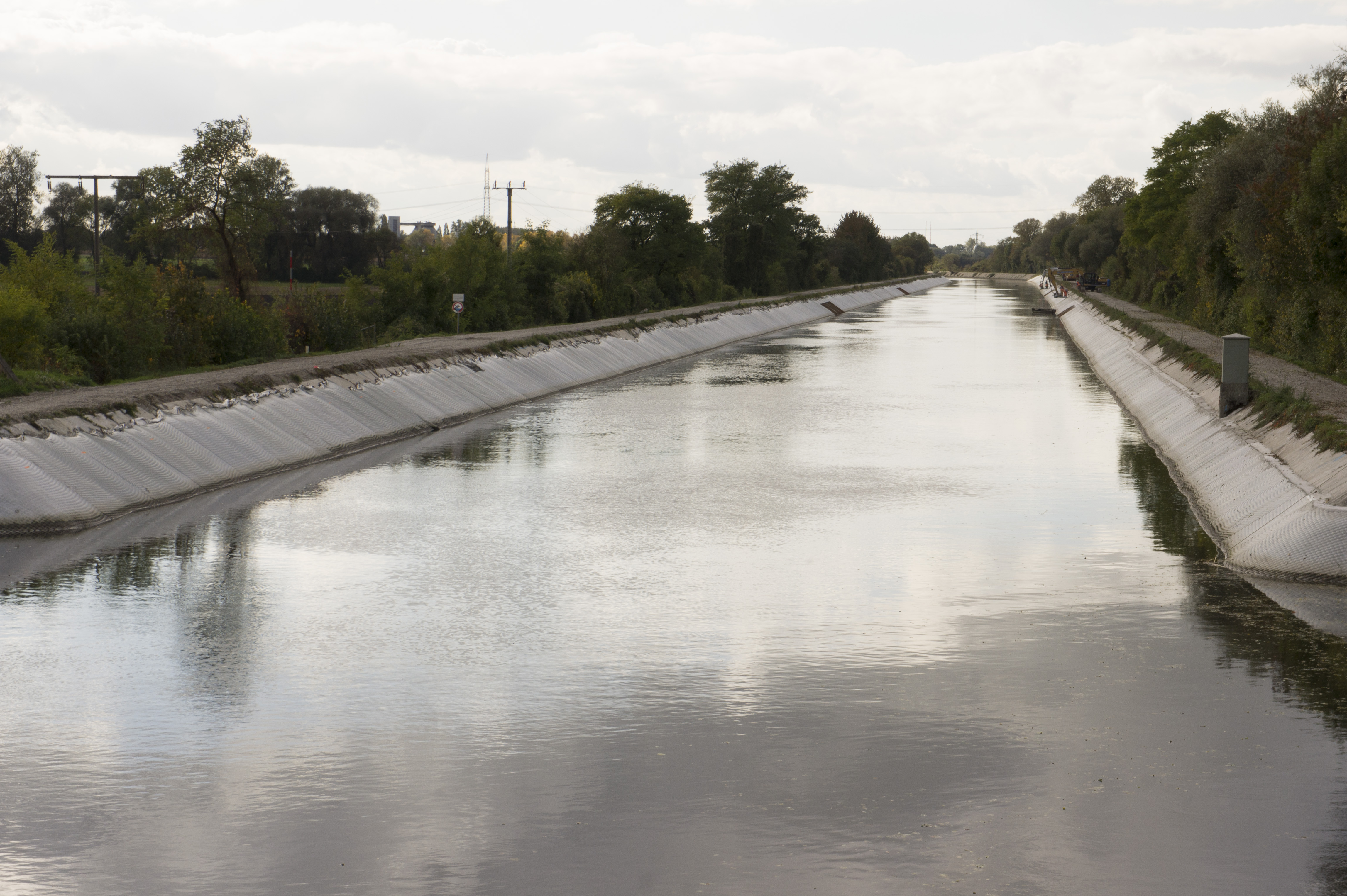
As part of the rehabilitation of a 3 km section of the Middle Isar Canal, north-east of Munich, a new surface seal was to be installed over the existing canal lining. To this end, approximately 150,000 m² of Incomat Standard geosynthetic concrete mat was installed within a few months. As it was not possible to lower the water level, the renovation work had to be carried out entirely underwater. An innovative installation method enabled a rapid installation and allowed the power station to continue operating overnight.
The approximately 64 km long Middle Isar Canal was built between Munich and Landshut in the 1920s. The capacity of the canal, which is fed by the Isar and used exclusively for power generation, is approximately 150 m³/s. The power station cascade of the Mittlere-Isar-Kanal consists of seven run-of-river power stations with a total output of just under 130 MW and generates approximately 580 GWh of hydroelectric power annually, enough to supply around 160,000 households. After almost 90 years of operation, the ravages of time have also left clear marks on the concrete lining of the Middle Isar Canal. Significant damage to the concrete structure is particularly evident in the water exchange zone, with spalling and cracks around the construction joints being subjected to additional stress in places due to plant growth. Extensive inspections also revealed large areas of erosion.
Between 1997 and 2009, large sections had already been repaired using conventional methods. A fundamental prerequisite for carrying out these measures was always the draining of the area, or at least a partial lowering of the water level. In weir sections 4a and 5, which were to be renovated in 2013, such a lowering was not possible for both operational and water law reasons. The refurbishment work therefore not only had to be carried out entirely underwater, but a minimum flow rate of approximately 18 m³/s also had to be considered. The decision not to lower the water level was intended to offer the client and power plant operator E.ON a further economic advantage: during the night-time shutdown periods at the construction site (from 8 pm to 6 am), the power plants on the Middle Isar Canal were to generate energy during normal operation to avoid unnecessary loss of revenue. To renovate the two sections, totaling 3 km in length, a reliable sealing system was therefore sought that could be installed underwater directly onto the aged existing surface.
Solution
As early as 2009, a test rehabilitation project involved lining an approximate 150 m long section of the Middle Isar Canal with a geosynthetic concrete mat. The results and findings from the project proved convincing from both a technical and economic perspective. The concrete mat consists of two layers of synthetic fabric connected by regularly spaced webbing strips. The cavity between them is filled in situ with flowable concrete. The fabric acts as a permanent formwork, enabling a robust concrete revetment to be constructed in a very short time, even on steeply sloping surfaces, both in dry conditions and underwater. The thickness of the revetment can be determined by the variable length of the web strips. Conventional formwork ‘work’ is completely eliminated.
Advantages
The decision to carry out the rehabilitation of sections 4a and 5 of the Middle Isar Canal using Incomat Standard, particularly in combination with the innovative installation method developed by Hagn Umwelttechnik, promised a range of technical and economic benefits, which were achieved through the successful execution of the project. Hardly any other sealing system can be installed as reliably on underwater sloping surfaces as Incomat Standard. The flexible formwork fabric was robust enough to withstand the stresses during installation and adapted perfectly to the geometry of the substrate. No subsequent covering of the seal (as a protective layer, ballast, etc.) was necessary.
The installation method not only allowed up to 3,000 m² of Incomat Standard to be installed per day, but it was also possible to increase the discharge capacity overnight and resume power station operations. The permeability of the seal was continuously monitored by testing core samples taken from the site. Close, effective coordination both internally and between the construction company, designers, clients and suppliers was a crucial factor in the success of this exciting challenge.

Further information